I first came across the concept of the Baster cultural group when researching Micheal Wimmer. Michael’s second wife – Margarethe Beukes – is referred to as coming from a Baster family. Basters are of mixed-race, descended from white European settlers and indigenous peoples. They tended to speak Dutch and adopted a European way of life. They were a distinct cultural group and were economically advanced. From the latter half of the 18th century they settled predominately in an area of the north western Cape Colony, including where Michael Wimmer had settled at Steinkopf.
In 1868, in response to an increased sense of discrimination, a group of about 30 families set off from the Cape Colony to settle near Rehoboth in what is now Namibia. Two of that first group were the Beukes and Wimmer families. The Wimmers travelled firstly to Keetmanschoop and then on to Rehoboth. The Wimmers were accompanied by the Hein family – Johann Hein being the husband of Elisabeth Wimmer, one of Michael’s daughters.
One of Elisabeth’s brothers, Gert Wimmer, was the leader of the so-called Hoachanas Baster community in the 1880’s. Hoachanas is not far from Rehoboth. The community later moved to Lidfontein and Hoorkrans.
During my Internet searching, I came across photos of two Rehoboth Baster people: Martin Wimmer and Anna Beukes. At the time, I no idea whether they had any connection to our Wimmer family.
Why Martin Wimmer and Anna Beukes found themselves having their photographs taken had sinister overtones.
The photos came from a book, published in 1913, called Die Rehobother Bastards und das Bastardierungsproblem beim Menschen: anthropologische und ethnographiesche Studien am Rehobother Bastardvolk in Deutsch-Südwest-Afrika (” The Rehoboth Basters and the Problem of Miscegenation among Rehobother Baster peoples in South West Africa“) by a man called Eugen Fischer. Fischer was a German professor of anthropology and eugenics. His works were read by Hitler and used in his manifesto “Mein Kampf”.
The book details his study of the Rehoboth Baster community concluded that mixed marriages should be prohibited and in 1912 mixed marriages in all German colonies (at the time Rehoboth was in the German Colony of South West Africa).
His work involved observing and studying the this group of Baster families, analysing their physical characteristics and observing their behaviour.
From his observations we know that Martin (subject number 51) was 41 years old, 1.75m tall, with a hair type number of 5, an eye colour number of 7 and a skin colour of 9. One other measurement that is listed is the intermembral index which is generally used to predict movement patterns in primates!!
I recently watched an excellent documentary on BBC4 about the ‘science’ of eugenics, in which Fischer artefacts were shown. One of these was a hair gauge which displayed (synthetic) hair samples with their numbers. Hair type 5 is straight dark brown hair.
His conclusion from his work was that mixed marriages should be banned, although having yet to read all of his book, I am unclear as to the basis for this conclusion.
His work formed a basis of the Nazi regime’s white supremacist policy.
I recently actually got to read this book when I visited the British Library. Its in German and I didn’t have time to read all of it, but the notion expressed in the detail of his findings is nevertheless disturbing.
From a genealogical perspective, though it had some interesting information. Both the Wimmer and Beukes family were part of Fischer’s study and family trees for both the Wimmer and Beukes family trees are in the book.
There are also photos of some of the subjects: including the ones I had seen on the Internet.
The Martin Wimmer I had seen before was, indeed, part of our Wimmer family. Martin was the son of Gert Wimmer, and so a grandson of Michael Wimmer Sr, the missionary from Austria, and thus a cousin of Mike’s gt.grandfather William Thomas Wimmer, and a first cousin three times removed of Mike.
The Anna Beukes, whose photograph I had seen on the Internet, was a third cousin of Martin Wimmer.
There was a photo another Beukes cousin: Katherina.
Anna, Katherina and Martin all shared the same gt.gt. grandfather: Jan Beukes, a descendent of an earlier Jan Beukes who arrived in the Cape in 1696 as a soldier, who had married an indigenous woman.
Katherina and Anna are both stunning women. Martin looks like a proud and sensitive man.
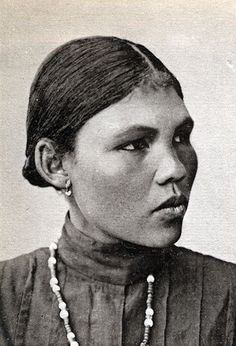
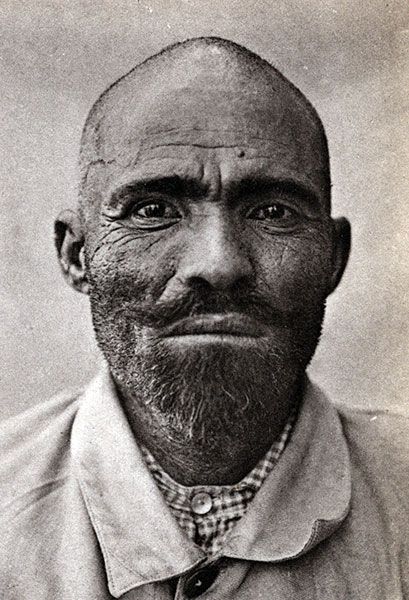
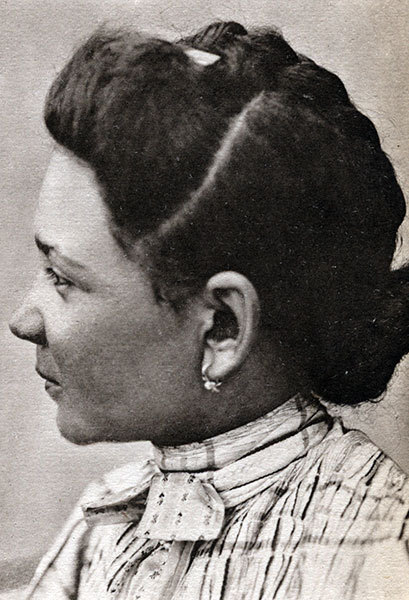
Anna Beukes (L), Martin Wimmer (C), and Katherina Beukes
The Rehoboth community still exists and numbers some 35,000 people, living in an area of just over 14 square kilometres south of Windhoek, the capital of Namibia.
 Things you didn't know about my family