We know quite a bit about Michael Wimmer Sr, but a lot less about his children. Michael Sr had eight children – three sons and five daughters. The elder two daughters – Margaret and Susanna Maria were the daughters of Michael’s first wife Elsje and his second wife Susanna, respectively.
The other six children (Elizabeth, Michael, David Gert (known as Gert), Johannes, Susanna Rosina and Martha) were born to Michael’s third wife Margarethe Beukes.
By accounts Michael’s eldest daughters, Margaret and Susannah Maria, ran the mission station whenever their father was absent.
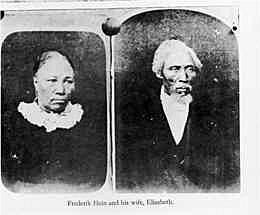
Elizabeth married a missionary Johann Freidrich Hein in 1849. Friedrich Hein as he was called, was a Rhenisch missionary. He was one of the first non-white missionaries. He ran mission stations in Kuboes and Richterveld. We know that the Rhenisch missionaries took over Steinkopf after William Sr’s death in 1840: perhaps that is how they met. There is, today, a primary school in Springbok – only 50km from Steinkopf -called the Elizabeth Wimmer school. I wonder if there is a connection?
The youngest of William and Margerethe’s daughters, confusingly called Susannah Rosina, married a Charles Henry Hill (the descendent of one of the early British settlers from the 1820’s), and there is a poignant story there: but that’s not the subject of this post.
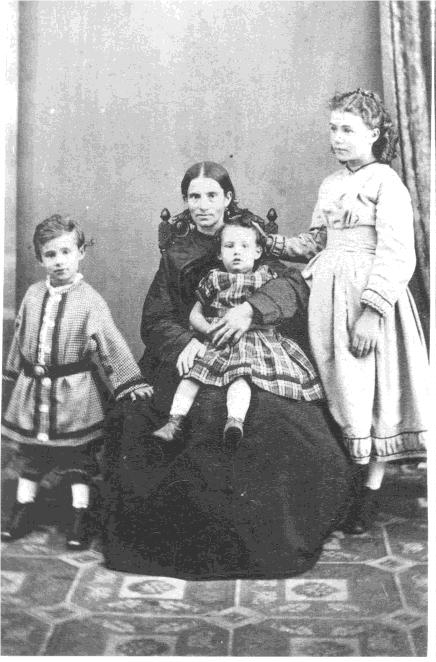
We know very little about David Gert, Johannes and Martha.
Gert is recorded as being a leader of the Hoachanas Baster community. Between August and November 1888, Gert Wimmer negotiated the move of his community from Hoachanas to Lidfontein, and a little later to Hoornkrans, as followers of Hendrik Witbooi, the Oorlam leader. We know that members of the Wimmer family became elders at the Rhenisch mission in Keetmanshoop, so it is likely that at least Gert and Johannes stayed in the north west area in what is now Namibia.
Michael Jr, is Mike’s gt. gt. grandfather and it would appear that he kept his links with the London Missionary Society (LMS), but not as a missionary but as a schoolteacher at the Caledon Institute Zuurbraak, some distance from Steinkopf and around 250km east of Cape Town.
The Zuurbraak mission was established in 1812 by Johannes Seidenfaden, and Michael Jr. moved to the mission in around 1856 when he was about 25. Michael’s father had been a missionary there in the early days of his life as a missionary.
Michael Jr. had trained as a teacher under Johann Friedrich Budler, a Rhenish missionary in South Africa, stationed in at Steinkopf from 1842-1844. Prior to arriving at Zuurbraak in around 1857, he worked at a Rhenisch mission run by the Rev. Gustav Zahn in Tulbagh, around 120km north east of Cape Town. Perhaps he got the job through the Rhenisch connections of his sisters.
He married a lady called Sara(h) Annie Corner (O’Connor) and also had eight children, all born in Zuurbraak.
Sara Corner was the daughter of a William Folger Corner and an unknown mother. William Corner was a missionary assistant with the London Missionary Society who was a freed slave from Demerara (now known as Guyana). I have written a piece on William separately. She was born in around 1835.
When I first came across Sara’s name it was given as Sarah O’Connor, which led me to believe that she was probably from Britain or Ireland with a name like O’Connor. However, it looks like this was an “anglicization” of her name. Her death notice has her name as Sarah Wimmer, formerly Conner.
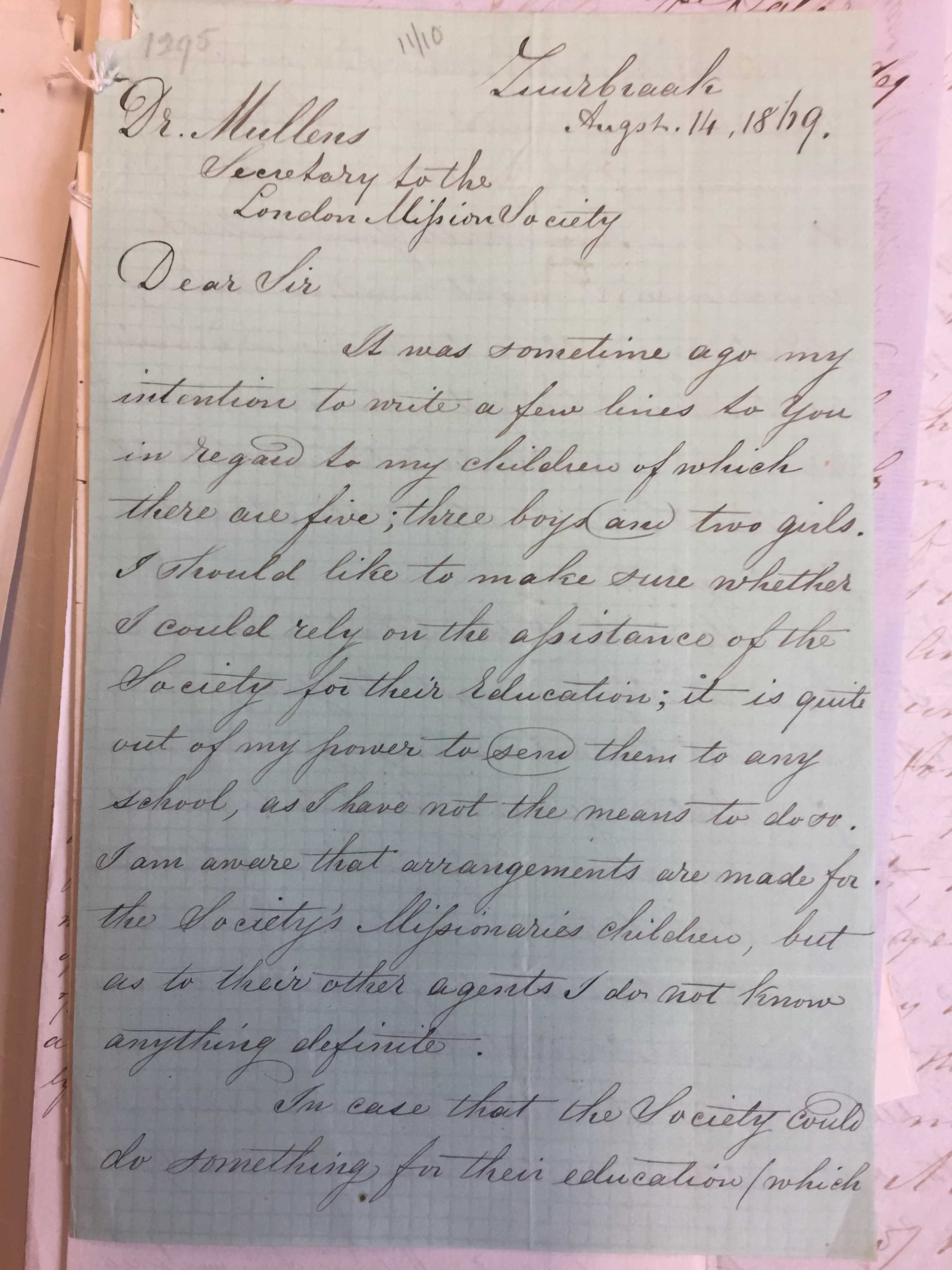
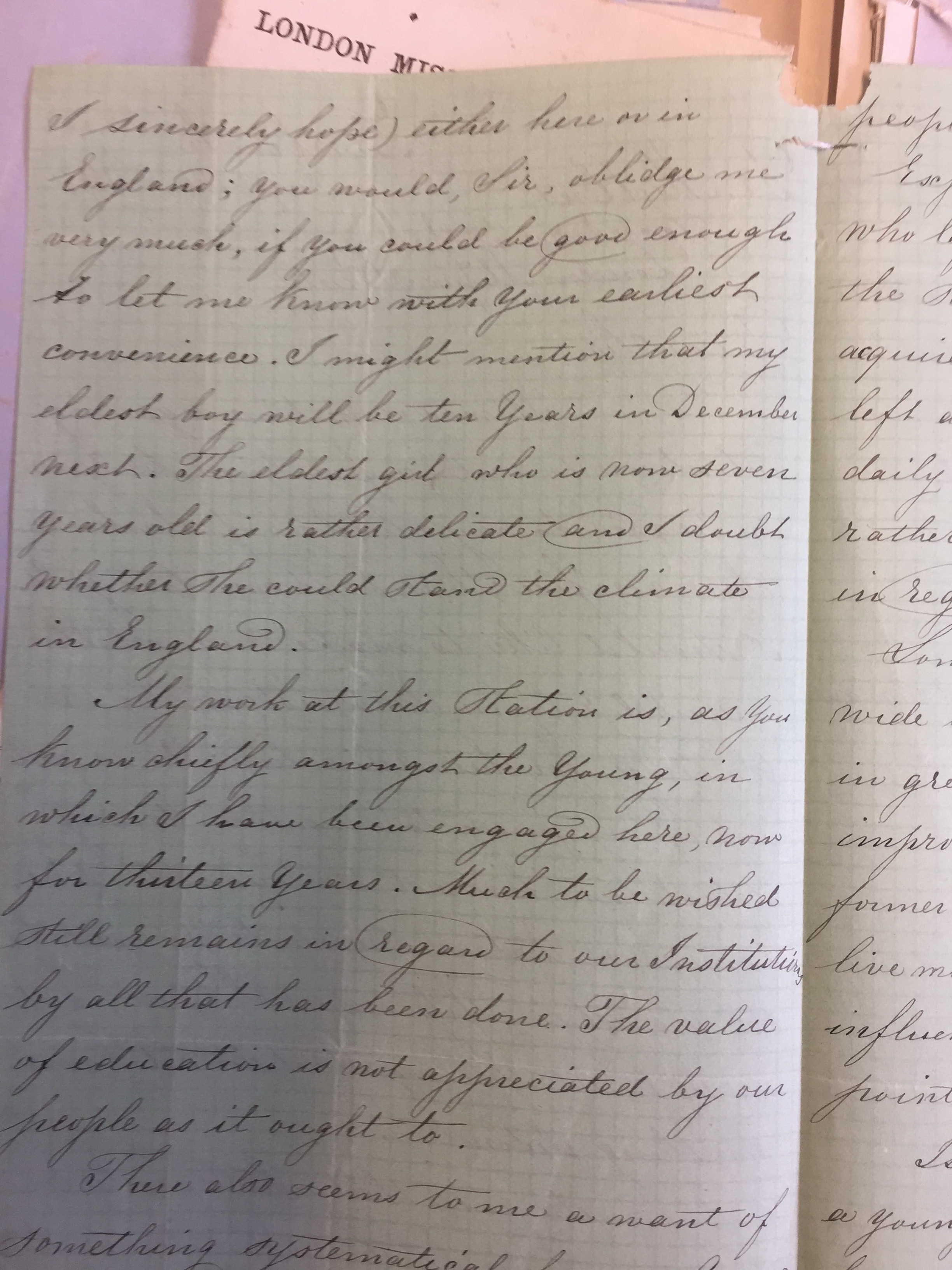
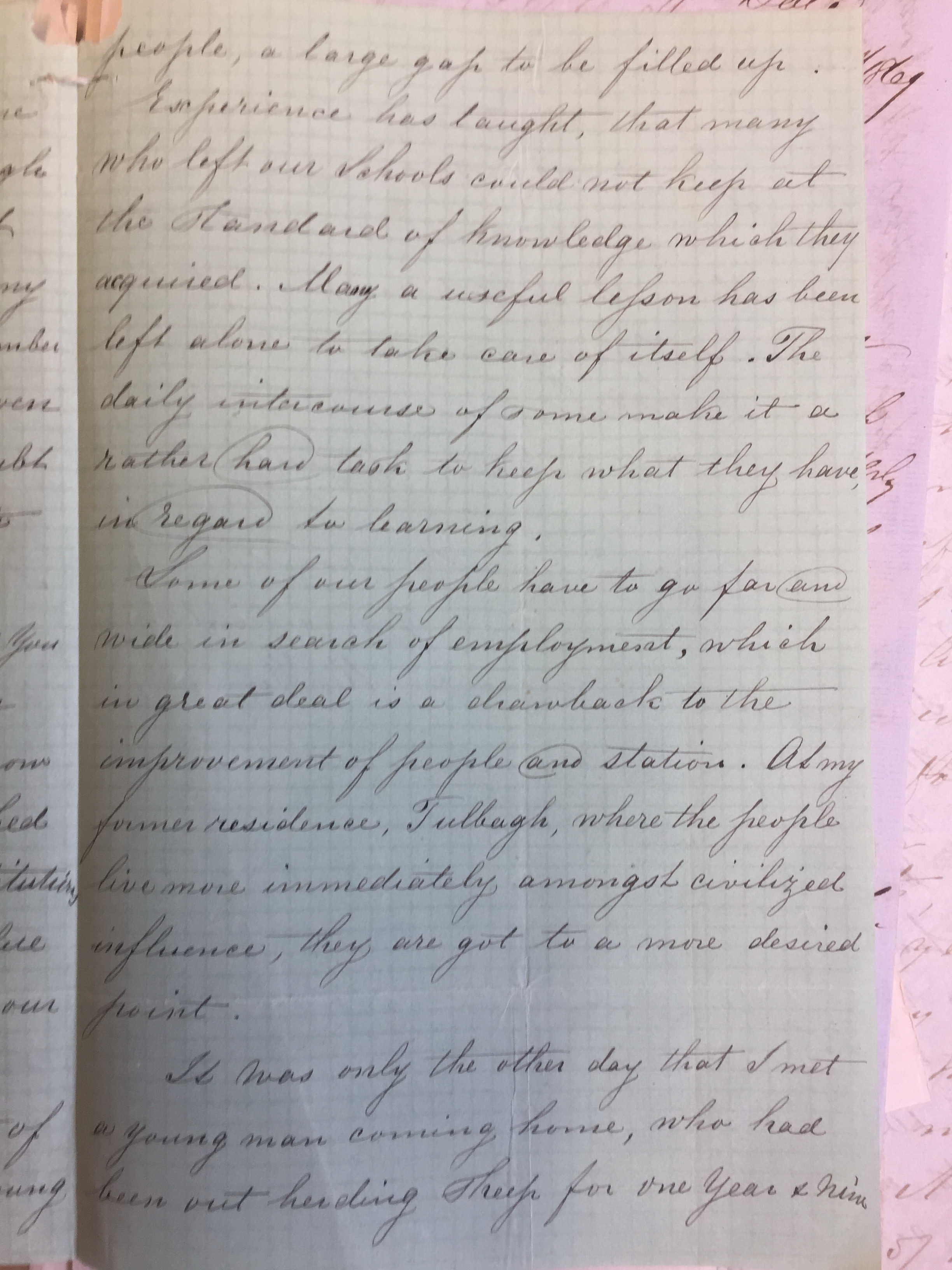
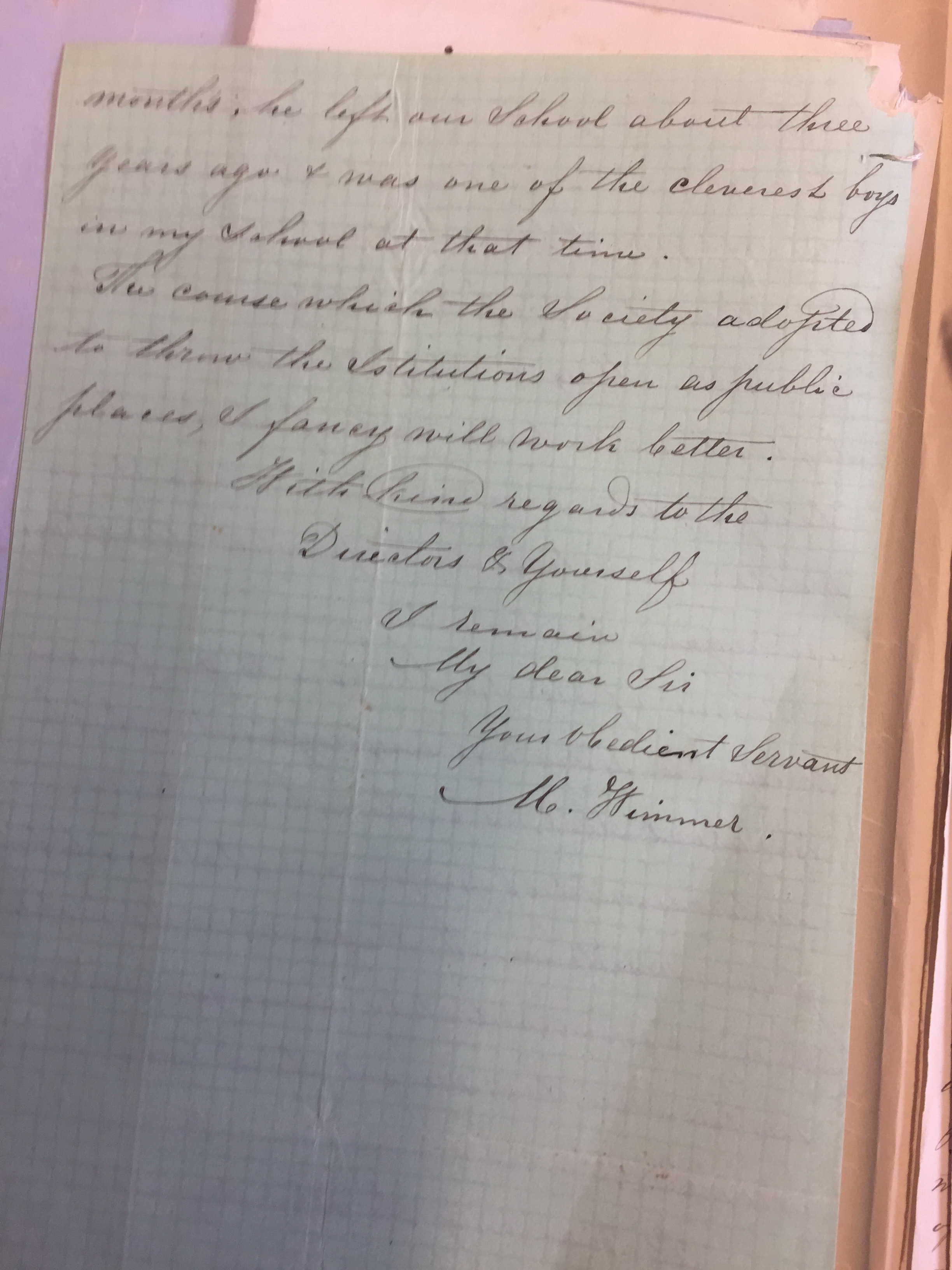
Michael Jr. refers to one of his children – William Thomas – in a letter to his LMS superiors, written in 1869. In beautiful copperplate handwriting he asks if they would be able to fund his children’s education back in England. We have no idea as to whether they did or not.
William Thomas is Mike’s great grandfather.
In that same letter he bemoans the fact that while the young received an education at the mission, the skills were often lost as they had to leave to get work and move away.
“Experience has taught that many who left our schools could not keep at the Standard of Knowledge which they acquired. … The daily intercourse of some make it a rather hard task to keep at what they have in regard to learning.
Some of our people have to go far and wide in search of employment, which in a great deal is a drawback to the improvement of people and station. …. It was only the other day that I met a young man coming home, who had been out herding sheep for one year and nine months, he left our school about three years ago and was of the cleverest boys in my school at that time.
The course which the Society adopted to throw the Institutions open as public places, I fancy will work better.“
Michael died on the 21st March of 1900 on a farm in Broederstroom near Pretoria, possibly with his daughter and her family. At the time, the country was mired in the Boer War. His wife outlived him. At the time of his death he was said to be a tracker (“trekker”) and was living far from where he started off his life.
Sara died in 1917. At the time of her death, she was also living in Broederstroom.
I haven’t been able to find out why he left Zuurbraak to move north to Pretoria. The diamond rush in Kimberley happened in 1866 – perhaps that was the impetus. Pretoria was founded in 1855 by the famous Boer trekker, Marthinus Pretorius, and we know that his three daughters all married into the Pretorius family and settled in Pretoria. Perhaps he moved to be nearer his family.
I understand that – as in many mixed race communities – people may embrace their mixed race heritage whilst others seek to distance themselves from it. South Africa was no different. Often they did not really know where they “fitted in”. Many who could pass as white moved north towards the Transvaal where there was a larger white population.
Through this blog I have made contact with someone who has done some research on Michael Wimmer and his family. He mentioned to me that, anecdotally, he had spoken with some Wimmer descendants who mentioned that Michael Wimmer Jr. was a “ligte baster”: lighter skinned. One possible explanation may have been Michael Jr’s wish to become accepted as a “white” person, and his children had married into Boer and British Cape Colony families. Perhaps he was moving away from his darker skinned relatives.
In any event, in just under 100 years, the Wimmer family had moved from missionaries in the remote north west of southern Africa to a family that was spread around the whole of southern Africa.
 Things you didn't know about my family
I believe that Michael Wimmer Sr. also had a wife here in the U.K prior to going to SA as part of the London Mission Society…So Suzanna would’ve been his second wife, not first. Most of his information is documented in the London Museum. I am a descendant of Michael Wimmer Sr… through his daughter Elizabeth. Been looking for more information about him and his children, and this has helped a little. Thank you for the information
LikeLiked by 2 people
Hi.
I am a great great granddaughter of Elizabeth Wimmer. Residing near Springbok. This is all very interesting.
LikeLiked by 1 person